Which Angkor temples (especially around the Grand Circuit) are consistently quiet or ‘empty,’ and what rough daily visitor numbers do they see compared to Angkor Wat and Ta Prohm?
My short answer for quiet temple time
TL;DR: Which Angkor temples (especially around the Grand Circuit) are consistently quiet or ‘empty.’ I usually send travelers first toward Ta Nei, Ta Som, East Mebon, Neak Pean, Preah Khan, and Banteay Samre. Guide estimates place the quietest sites at roughly 50 to 400 visitors a day, while Angkor Wat may receive about 6,000 to 9,000 visitors on busy days and Ta Prohm about 3,000 to 5,000.
Which Angkor temples (especially around the Grand Circuit) are consistently quiet or ‘empty.’ The strongest answer is Ta Nei for near-solitude, Ta Som for tree-covered stone, and Preah Khan for a large temple with room to walk. I do not treat these small-site figures as official counts because APSARA and Angkor Enterprise do not publish a full daily count for every temple. I use them as planning estimates, not promises. For the latest pass and ticket information, I send guests to the official Angkor Enterprise ticket office.
My quick answer: I would choose Ta Nei for the fewest people, Ta Som for photography, East Mebon for space, and Preah Khan for the finest quiet large-temple visit.
What I would put at the top of your plan
- Ta Nei: about 50 to 100 visitors per day in guide estimates
- Ta Som: about 65 visitors per day in one local guide estimate
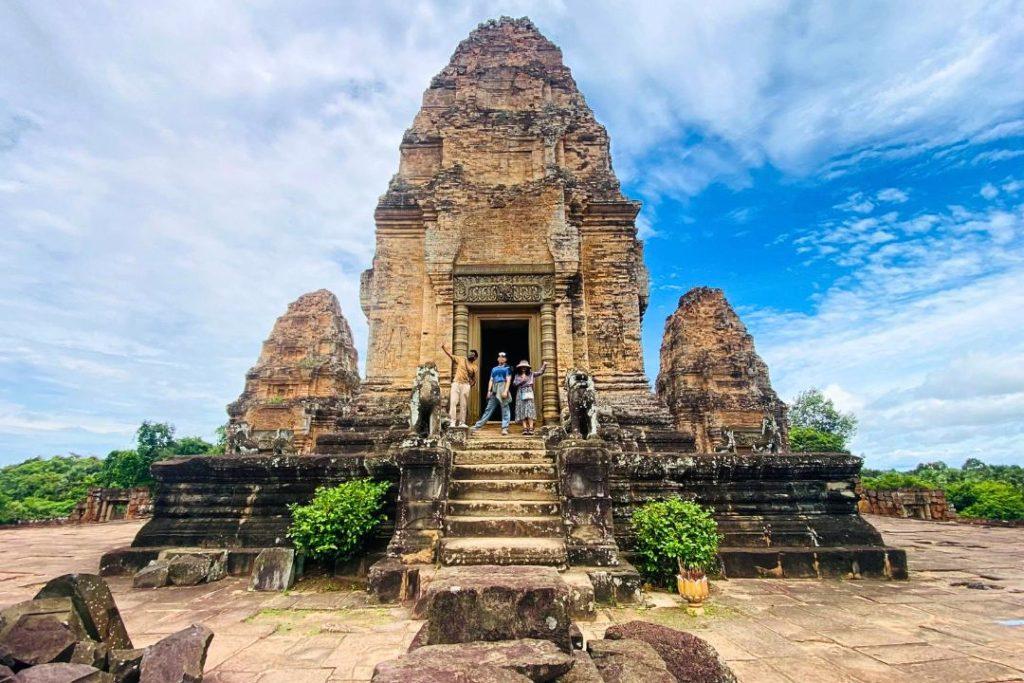
- East Mebon: about 72 visitors per day in one local guide estimate
- Neak Pean: usually low hundreds or less
- Preah Khan: about 200 to 400 visitors per day
- Banteay Samre: about 210 visitors per day
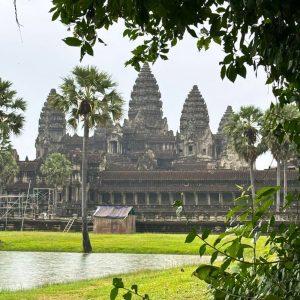
- Angkor Wat: about 6,000 to 9,000 on busy days
- Ta Prohm: about 3,000 to 5,000 on busy days
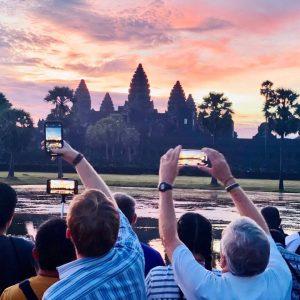
I have seen how different these places feel in person. Angkor Wat and Ta Prohm can feel like a shared public event. A quieter Grand Circuit stop can feel like a walk through old stone rooms with only a few other people nearby.
| Temple | Est. Visitors/Day | Peak Time | Confidence |
|---|---|---|---|
| Angkor Wat | 6,000–7,200 | Morning sunrise rush | High (APSARA) |
| Ta Prohm | 3,000–5,700 | Mid-morning groups | High (APSARA) |
| Preah Khan | ~200–400 | Morning | Medium |
| Banteay Kdei | ~150–300 | Minimal (generally quiet) | Medium |
| Ta Nei | ~~50–100 | N/A (almost no peak) | Medium |
| Ta Som | ~~100–200 | Morning / late afternoon | Low |
| East Mebon | ~~100–200 | Late afternoon (views) | Low |
| Neak Pean | ~~100–200 | Morning | Low |
Which Angkor temples (especially around the Grand Circuit) are consistently quiet or ‘empty.’?
I would start with Ta Nei if solitude matters most
I put Ta Nei first for travelers who want the smallest crowd. A local travel account estimates roughly 50 to 100 visitors per day, with many people arriving independently rather than by large coach, according to Journey Cambodia’s empty-temple guide.
Ta Nei sits away from the main road and requires a short walk through the trees. I like that small barrier. It keeps many visitors on the main route and leaves the temple calm for long periods.
I would not choose Ta Nei for a first visit if you want a full history lesson, shops, or a busy visitor area. I choose it for quiet stonework, forest shade, and the chance to hear birds instead of a stream of tour groups.
I send photographers to Ta Som
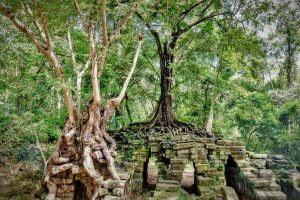
Ta Som is one of my favorite Grand Circuit stops for a quiet photograph. Its tree-covered eastern gate gives you the mood many people want from Ta Prohm, yet guide estimates place Ta Som at about 65 visitors per day, according to My Siem Reap Tours’ crowd guide.
I would arrive after the morning rush or around midday. The famous gate can still attract a small group, but the rest of the temple often feels open. I usually allow at least 30 minutes because the small size can fool you. The tree gate is the obvious stop, while the side passages reward a slower walk.
I use East Mebon for space and detail
East Mebon gives me a quieter setting with strong architectural detail. A guide estimate places daily visitors at about 72, far below the busy-day estimate for Angkor Wat, as reported by My Siem Reap Tours.
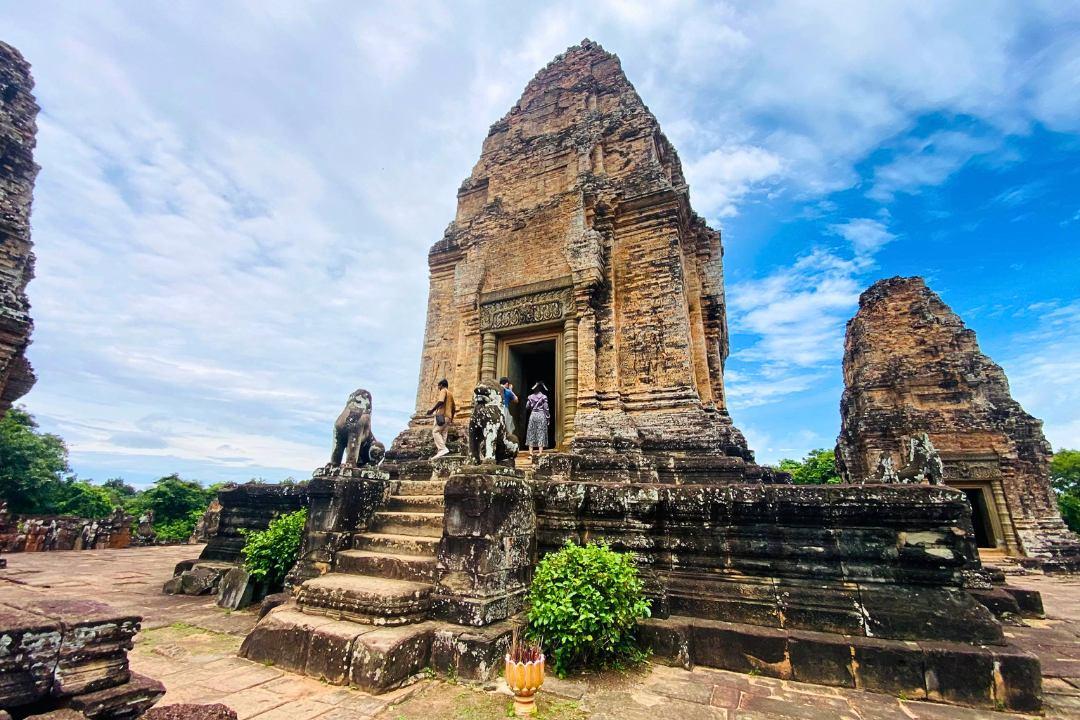
The temple once stood on an island in the East Baray reservoir. Today, the old reservoir bed gives the site a wide, open setting. I point out the stone elephants at the corners, the brick towers, and the higher platform.
I prefer East Mebon in the morning or late afternoon. I get softer light, fewer people, and more time to study the lintels without waiting for a group to move.
I choose Neak Pean for a short, unusual stop
Neak Pean is smaller than Preah Khan and reached by a long boardwalk over the water. Guide accounts place it in the low hundreds or below, well under the busy-site figures reported for Angkor Wat and Ta Prohm, as described in My Siem Reap Tours’ quiet-temple guide.
I would not plan half a day here. I use Neak Pean as a calm stop between larger temples. The boardwalk gives you a change of scene, and the central sanctuary sits in a striking water setting.
The site can feel busier when several groups arrive together because the central area is small. I usually place it outside the main morning flow.
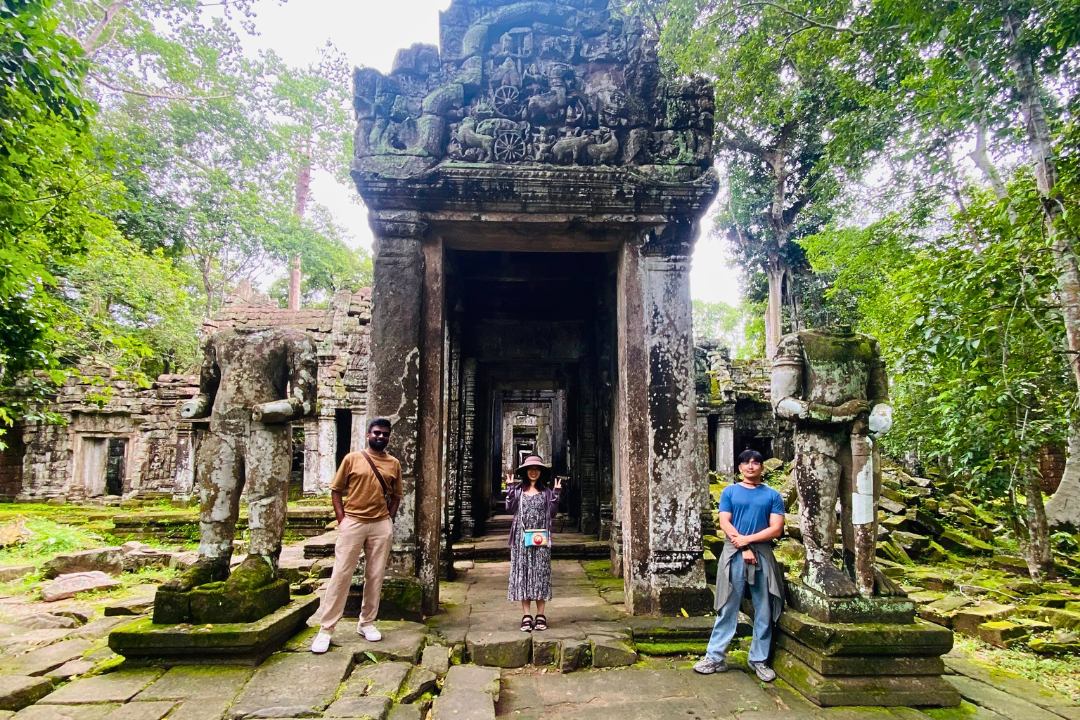
I recommend Preah Khan when you want a large temple without the crush
Preah Khan is my pick when you want scale and space. A local estimate places it at about 200 to 400 visitors per day, while the same source places Angkor Wat at 6,000 to 9,000 and Ta Prohm at 3,000 to 5,000 on busy days, according to Journey Cambodia.
Preah Khan is large enough to spread people across galleries, courtyards, and entrance paths. I often find a few groups near the main approach, then much more room farther inside.
This is where I would spend the most time. I look for the Hall of Dancers, long corridors, carved doorways, and the mix of stone and tree growth. If you want one Grand Circuit temple that feels substantial without the main-site pressure, I would place Preah Khan near the top.
How do the quiet temples compare with Angkor Wat and Ta Prohm?
I treat the large-site figures as benchmarks, not exact daily counts
I use Angkor Wat and Ta Prohm as crowd benchmarks because official visitor reporting focuses more on park totals and major attractions than on every small shrine. Angkor Enterprise reported 955,131 international visitors to the Angkor Archaeological Park in 2025, giving a park-wide average of about 2,617 international visitors per day when divided across 365 days, as reported by Economic Times Travel.
That park-wide figure does not mean every temple receives 2,617 visitors each day. I use it to show why the distribution matters. Most people gather at a few headline sites, while many smaller temples receive a much smaller share.
For site-level planning, one travel guide estimates Angkor Wat at 6,000 to 9,000 visitors on busy days and Ta Prohm at 3,000 to 5,000, while Preah Khan sits at about 200 to 400 in the same comparison, according to Journey Cambodia.
I would compare the sites in this order
- Angkor Wat: about 6,000 to 9,000 on busy days
- Ta Prohm: about 3,000 to 5,000 on busy days
- Preah Khan: about 200 to 400
- Banteay Samre: about 210
- Ta Som: about 65
- East Mebon: about 72
- Ta Nei: about 50 to 100
I would not claim that Ta Som receives exactly 65 people every day. Rain, school holidays, large tour bookings, road conditions, and season can alter the pattern. I use the figures to compare scale.
When should I visit the Grand Circuit?
I use midday when I want the smallest crowd
Many tour groups begin early, visit the headline temples, stop for lunch, and leave the park before late afternoon. One local crowd guide reports that the 12:00 pm to 2:00 pm period can bring about 83 percent fewer visitors than the morning peak, according to My Siem Reap Tours.
I would use that window at Ta Som, East Mebon, or Preah Khan. The heat is stronger, so I plan water, a hat, covered shoulders, covered knees, and regular rests.
If you dislike heat, I would choose early morning instead. I would reach a quiet temple soon after opening, then move before the larger groups arrive.
I use the rainy months when peace matters more than blue skies
The rainy season can bring fewer visitors across the park. I would still check the weather before setting out, since wet stone can make steps slippery and afternoon rain can affect road travel.
I prefer a flexible plan from June through October. I keep Preah Khan or another site with covered galleries as a backup. I also ask my driver to watch the sky rather than forcing a fixed order.
How can I fit quiet temples into a real tour?
I use a route that places the famous sites and quiet sites on separate days
I would not try to force every temple into one rushed morning. My preferred plan looks like this:
- Day one: Angkor Wat at sunrise, Bayon, and Ta Prohm
- Day two: Banteay Srei, Pre Rup, East Mebon, Ta Som, Neak Pean, and Preah Khan
- Optional extra stop: Ta Nei when you want a forest temple away from the main route
My Banteay Srei Backcountry Tour follows this style with Pre Rup, Banteay Srei, East Mebon, Ta Som, Neak Pean, and Preah Khan. The tour runs for eight hours, uses air-conditioned transport, and keeps the group at no more than ten people, according to the tour details.
For travelers with two days, I would pair the famous temples with the quieter Grand Circuit. My 2-Day Angkor Wat Sunrise and Banteay Srei Grand Tour places Angkor Wat, Bayon, and Ta Prohm on day one, then Preah Khan, Ta Som, Neak Pean, East Mebon, Pre Rup, and Banteay Srei on day two.
I tell guests not to chase an empty temple at any cost
I want quiet, but I also want a safe and respectful visit. I stay on marked paths, avoid climbing restricted stones, wear suitable clothing, and keep my voice low near active religious areas.
I also check the latest ticket rules before travel through Angkor Enterprise. Park access rules and opening details can change, so I do not rely on an old travel post for the final word.
Which Angkor temples (especially around the Grand Circuit) are consistently quiet or ‘empty.’ My final advice
I would choose Ta Nei for the fewest visitors, Ta Som for the tree gate, East Mebon for open space, Neak Pean for its water setting, and Preah Khan for a large temple that does not feel packed. Which Angkor temples (especially around the Grand Circuit) are consistently quiet or ‘empty.’ The answer is not one secret gate or one perfect hour. I get the best result by separating Angkor Wat and Ta Prohm from the Grand Circuit, then using midday or an early start.
My practical steps are short:
- Check the current pass details with Angkor Enterprise.
- Place Angkor Wat and Ta Prohm on one day.
- Place Ta Som, East Mebon, Neak Pean, and Preah Khan on another.
- Ask me to adjust the order around weather, heat, and your interests.
- Send a request through the Siem Reap Shuttle contact form.
I have always preferred the moment after the main crowd turns away. At Ta Som, that can mean one quiet gate, warm stone, and only a few voices in the trees. That is what Which Angkor temples (especially around the Grand Circuit) are consistently quiet or ‘empty.’ means to me: not a guarantee of having every ruin to myself, but a far calmer way to meet Angkor.