What is the historical significance of Koh Ker temple complex?
Through the rise of a royal capital, the birth of a new Khmer art style, and the temple clues that still shape how you see the site today.
See why Koh Ker is not just a remote temple stop, but one of the sharpest windows into royal power, sacred design, and early Khmer ambition.
What is the historical significance of Koh Ker temple complex? It was a royal capital of the Khmer Empire, not just a temple cluster in the forest. King Jayavarman IV set up Koh Ker in 921 CE, and it became the empire’s sole capital from 928 to 944 CE.
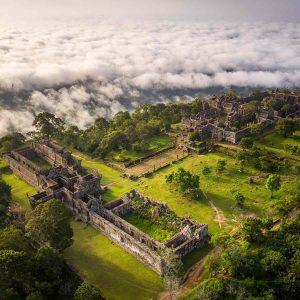
The site covers 81 square kilometers and includes nearly 180 sanctuaries, which tells you this was a full sacred city, not one monument on its own.
Its art, now called the Koh Ker Style, shaped later Khmer sculpture with bold movement and strong form. Its builders also pushed giant stone work in a way that fed later temple building at Angkor.
What is the historical significance of Koh Ker temple complex? In plain terms, it shows a rare moment when royal power moved away from Angkor, tried a new center, and left behind a city that still feels frozen in time.
What is the historical significance of Koh Ker temple complex? It is the story of a short-lived capital that still tells you how Khmer kings used religion, stone, and city planning to show power.
Fast points
- Koh Ker was founded as a royal center in 921 CE
- It was the sole capital from 928 to 944 CE
- The city was built in a single 23 year burst
- The site spans 81 square kilometers
- Scholars count nearly 180 sanctuaries
- UNESCO placed Koh Ker on the World Heritage List in 2023
- UNESCO-backed work cleared 306,334 square meters of contaminated land around the site
- Prasat Thom rises 36 meters with seven tiers
- The site sits 120 km from Siem Reap, around 2 hours 15 minutes by car
What is the historical significance of Koh Ker temple complex? If you are asking that before your trip, you are asking the right thing. Koh Ker lands harder when you know what you are looking at.
I say that because the place can fool you at first. It feels quiet. Remote too. Then the numbers hit you. A former capital. A city built fast. A giant pyramid. An art style of its own. Suddenly it stops being “another temple day.”
That shift matters on the ground. When I take people out there, I do not talk about Koh Ker like a side note to Angkor. I talk about a royal gamble. A king moved the center of power, raised monuments in stone, and left a site that still carries that break with the old order.
And yes, that story makes the trip better.
- Why a short capital period still matters
- Why the pyramid is more than a photo stop
- Why Koh Ker helps you read Angkor with fresher eyes
- Why the forest setting can hide the scale at first
- Why pairing Koh Ker with Beng Mealea makes a long day feel full
- Why ticket rules matter before you set off
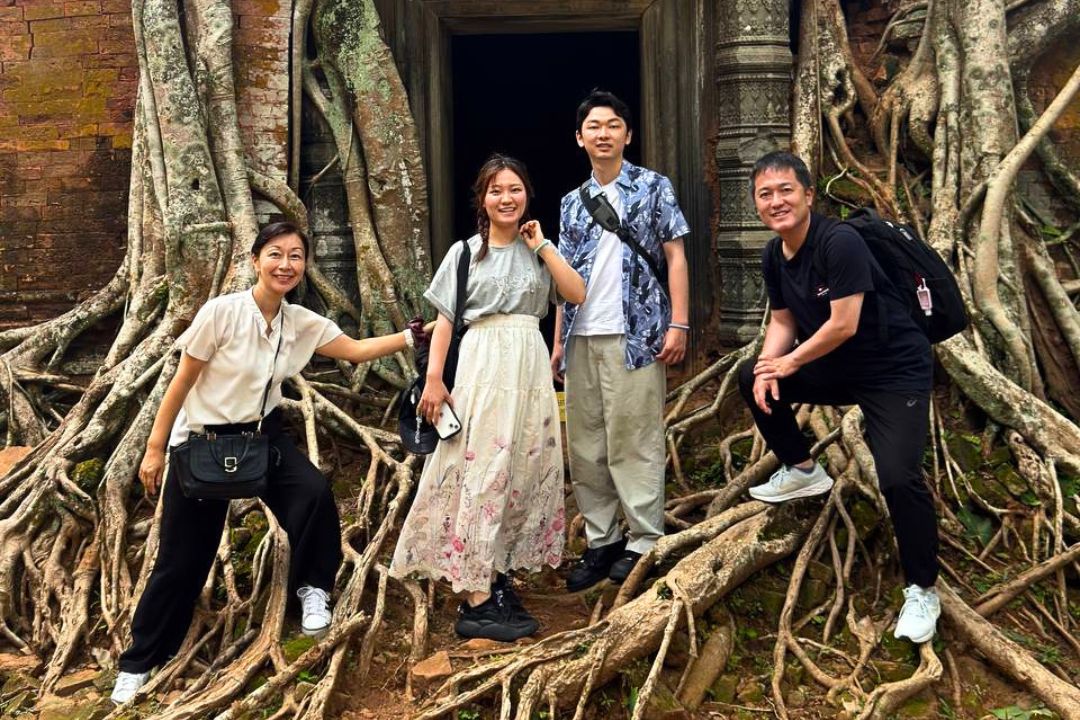
What is the historical significance of Koh Ker temple complex?
It mattered because Koh Ker was once the seat of royal rule, sacred ritual, and new Khmer art all at once.
That is the short answer I give on the road. Koh Ker was not built as a minor outpost. It was built as a capital city with temples, hydraulic works, inscriptions, sculptures, and a city plan tied to sacred ideas of the universe.
UNESCO states that King Jayavarman IV founded Koh Ker in 921 CE. From 921 to 928 CE, Koh Ker and Angkor stood as rival capitals. From 928 to 944 CE, Koh Ker became the empire’s sole capital. That is a tight window, yet it is long enough to leave a major mark.
The site also rose in one burst over 23 years. I find that striking. You can feel that focus in the place. Koh Ker does not read like a city added to bit by bit over centuries. It feels like a sharp statement from a king who wanted power seen fast.
Why does that short capital spell still matter now?
Because a short run at the top can still leave a long shadow in art, religion, and royal planning.
Some travelers hear “only twenty-three years” and think that makes Koh Ker minor. I think the reverse. A short run can tell you more, not less, because the royal message had to be packed into stone with no wasted motion.
Here is what I mean:
-
It marks a break from Angkor
A king moved the center of rule away from the usual core. That alone makes Koh Ker stand out in Khmer history. -
It gave birth to the Koh Ker Style
UNESCO points to a bold sculptural style with strong movement and force. When you know that, statues from the period stop looking like old stone. They start feeling charged. -
It pushed giant block building
UNESCO also marks Koh Ker as a prototype for grand-scale stone building using huge monolithic blocks. That matters because later Khmer temple work did not come from nowhere. -
It kept its own setting
The site has high authenticity in part because it was not heavily remade later. You are not looking at a polished remake. You are looking at a place that still holds its old shape.
A quick way to read the site on foot
When I walk travelers through Koh Ker, I ask them to read it in three layers:
Power
A king needed people to see that rule had moved. A capital does that in stone.
Faith
The city plan and temple form were tied to sacred Hindu ideas, not random placement.
Permanence
Even a short-lived capital wanted to look eternal. That is why the scale feels so bold.
What makes Koh Ker different from many other temple sites?
Koh Ker was a full sacred city, not one lonely ruin in the woods.
That point gets missed all the time. People see one photo of Prasat Thom and think Koh Ker is just the pyramid. It is not.
The wider site covers 81 square kilometers and holds nearly 180 sanctuaries. Only part of that is open and easy for visitors, yet the scale tells you what kind of place this was. It was a capital city with a royal palace area, water works, temples, sculpture, wall painting, and inscriptions.
That is why I think the historical pull of Koh Ker is so strong. You are not visiting a single temple. You are stepping into the bones of a city.
There is another layer too. UNESCO notes that many looted sculptures have been repatriated. That matters. It tells you Koh Ker was rich enough in art to attract theft, and prized enough for recovery work to matter today.
Why is Prasat Thom such a big part of the story?
Because the pyramid puts royal ambition right in front of your face.
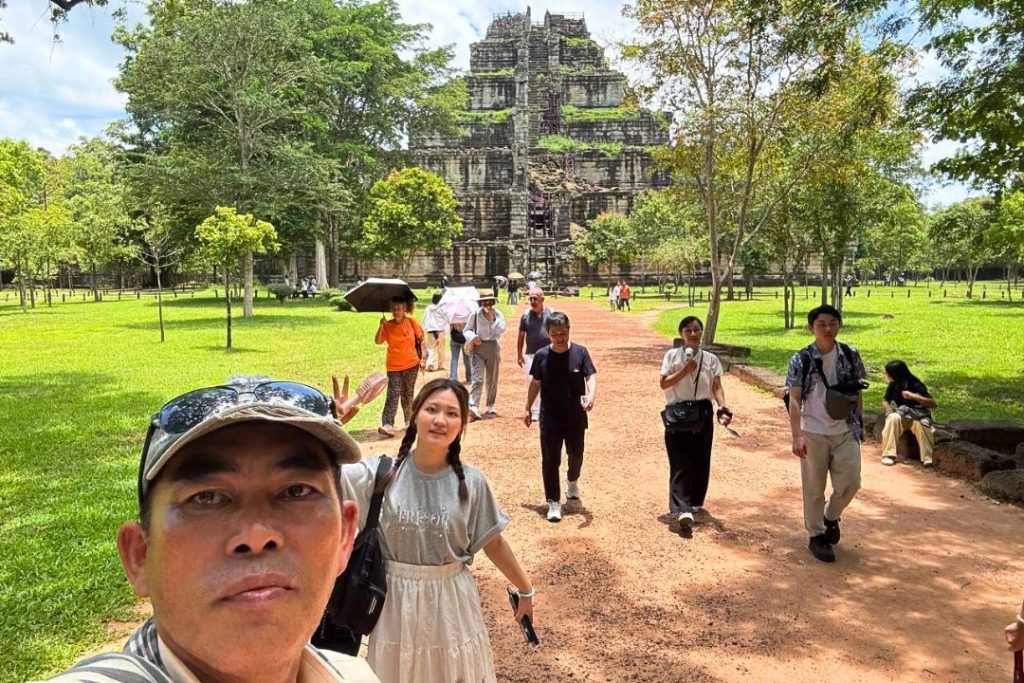
Prasat Thom is the image most people know, and fair enough. It rises 36 meters over seven tiers. On site, that height does something to you. The whole place feels less like a quiet ruin and more like a statement.
I like that the climb is still a little raw. Barefoot. No handrail. You feel the stone. You feel the grade. The climb turns the history into body memory.
And the pyramid is not just dramatic. It tells you something real about Koh Ker. This was a king making a claim. Height, mass, and sacred order were part of that claim.
What is the historical significance of Koh Ker temple complex for you as a traveler?
It gives you a richer day because the site stops being remote and starts making sense.
You do not need a history degree for Koh Ker. You just need the right frame.
If you know the site was a capital, the distance from Siem Reap stops feeling like a nuisance and starts feeling earned. If you know the art style born here shaped later Khmer sculpture, the carvings stop feeling flat. If you know giant block building pushed later temple work, you start seeing Koh Ker as part of Angkor’s wider story, not outside it.
That is why I often pair history with route planning. A long temple day is easier to love when the site means something.
If you want that full day in one run, I would look at my Koh Ker and Beng Mealea tour. It is a 10 hour day with hotel pickup from 7:40 am to 8:10 am, a 8:30 am departure, and a 6 pm drop off. If you want more control over stops and pace, my private Koh Ker and Beng Mealea temple tour runs 9 hours, starts at 8:30 am, and includes hotel pickup, water, towels, and an English-speaking guide.
What should you know before you go?
Koh Ker is easy to admire from a screen. It is far better when the road plan is sorted first.
I keep this part short when I brief travelers:
-
Koh Ker sits 120 km from Siem Reap
That is about 2 hours 15 minutes each way by car. -
It has its own ticket
The official Angkor Enterprise system lists a separate Koh Ker Temples Park pass with entry from 6:00 AM to 6:30 PM. -
Beng Mealea is separate too
The same official system lists Beng Mealea as its own one day product. -
Only part of the site is open for visits
That is one reason the place still feels spare and quiet. -
The story is bigger than the visit path
What you see in one day is only a slice of the old capital.
What is the historical significance of Koh Ker temple complex in one clean line?
It is the rare Khmer capital that lets you see a royal break, a new art language, and a city-scale sacred plan in one place.
That is the line I come back to. It is short, but it holds.
Koh Ker was a royal move. It was an artistic move. It was a building move. And it still speaks. Loudly.
UNESCO-backed work since 2022 has also done real ground work around the site, including the clearance of 306,334 square meters of contaminated land. I like ending on that fact because it shows Koh Ker is not trapped in the past. People are still working to protect it, study it, and make it safer to visit.
Why I think Koh Ker stays with people
The place feels distant from town, but close to the raw nerve of Khmer rule.
That is my own reading of it. Angkor can feel vast and polished in the mind before you arrive. Koh Ker feels harder, stranger, and more abrupt. I like that.
What is the historical significance of Koh Ker temple complex? For me, it is the way a short royal moment still stands upright in stone. You can feel the urgency of it. You can feel what the king wanted the city to say.
If you want to visit with that story in mind, start with the route that fits your day. Read my Koh Ker and Beng Mealea tour if you want a shared run, or look at my private Koh Ker and Beng Mealea temple tour if you want your own pace. Then send me a note through my contact page. I will point you toward the trip that fits your time, your road stamina, and how much history you want folded into the day.
Koh Ker is not just old stone. It is a royal statement that never quite stopped speaking.