What to Wear in Cambodia Temples Practical Guide to Dress Right with Cultural Tips
Simple outfit rules, clear do not wear notes, and easy tour day packing tips
What to Wear in Cambodia Temples is actually pretty simple: cover your shoulders, cover your knees, and dress like you’re visiting a sacred place rather than a beach club. At Angkor and other temple sites, that basic rule matters because modest clothing is actively enforced and visitors in revealing outfits can be refused entry.
What to Wear in Cambodia Temples comes down to one safe formula: a sleeved top, lightweight trousers or a skirt that covers the knees, and comfortable shoes you can walk in for hours. Breathable fabrics like cotton and linen work best in Cambodia’s heat, and they usually feel better than denim or tight activewear once the day gets long.
At Angkor, a scarf thrown over bare shoulders is not the smartest workaround, because temporary shoulder covering may not be accepted. If you’re joining temple-heavy days like the Angkor sunrise tour or Explore Angkor, dress modestly from the start so you don’t lose time at the gate. Do that, and the whole day feels easier.
Key takeaways
-
Cover shoulders and knees every time you visit a temple or pagoda.
-
Pick loose, breathable fabrics like cotton, linen, or light travel material for comfort in the heat.
-
Skip tank tops, short shorts, mini skirts, and beachwear if you want a smooth entry.
-
For sunrise or full-day temple circuits, wear your respectful outfit from the hotel rather than trying to fix it later.
-
When your trip includes pagodas like Roka Pagoda on the Kompong Phluk Floating Villages Tour, modest clothing is part of showing respect.
What to Wear in Cambodia Temples if you want zero hassle?
The short answer: wear a top with sleeves, bottoms below the knee, and shoes you can actually walk in.
That’s the safest version of What to Wear in Cambodia Temples, and honestly, it’s the one I recommend to almost every traveler. It fits the cultural expectation, works at major temple gates, and saves you from awkward last-minute clothing fixes. It also keeps you more comfortable on stone steps, dusty paths, and long temple days.
Here’s the easy rule I use with travelers: if your outfit would look fine at a quiet family lunch, it will probably work at a Cambodian temple. If it looks like gym wear, club wear, or pool wear, I’d rethink it.
Temple outfit guide
| Wear | Avoid | Why it works |
|---|---|---|
| Sleeved T-shirt, linen shirt, or light blouse that fully covers the shoulders | Tank tops, spaghetti straps, sleeveless tops | Shoulder coverage is one of the clearest dress-code expectations at Angkor and similar sacred sites |
| Loose trousers, lightweight travel pants, or skirts below the knee | Short shorts, mini skirts, anything above the knee | Knee coverage is part of respectful temple dress and reduces the chance of being turned away |
| Cotton, linen, or breathable technical fabrics | Heavy denim, clingy fabric, tight revealing clothes | Light fabric handles heat better and usually feels more practical during long walks |
A quick note on “cover-ups”
A lot of people ask me if they can just throw on a scarf at the entrance. I wouldn’t rely on that, because guidance from Angkor dress-code sources says temporary shoulder covering like a shawl or scarf may not be accepted. Start the day dressed properly and you won’t have to negotiate with a temple gate in the heat.
Why does What to Wear in Cambodia Temples matter so much?
Because temples in Cambodia are still sacred spaces, not just sightseeing stops.
Yes, Angkor is world-famous. But it’s also a religious and cultural place, and the dress code exists to protect that sense of sanctity. When authorities say revealing clothes disrespect the site, they mean it, and enforcement has been in place for years.
This is the part some travelers miss. What to Wear in Cambodia Temples is not mainly about fashion. It’s about respect, access, and the tone you set for your visit. You will feel the difference too. When you’re dressed right, you move through the day with less friction and a lot more confidence.
I also think modest dressing changes your mindset in a good way. You stop treating the temple as a backdrop and start paying attention to the carvings, the silence, the history, the people around you. That shift matters.
Dress for the country, not just the weather
Cambodia is hot. No argument there. But “hot” does not automatically mean “wear as little as possible.” Loose long trousers and light tops often feel cooler than tight shorts and synthetic fabrics once the sun is up and the stone starts reflecting heat back at you.
And there’s a practical side most people appreciate after hour two:
-
More sun protection.
-
Fewer scratches on rough temple stone.
-
Less need to buy emergency cover-up clothing near the entrance.
-
Better comfort when you move between temple grounds, village stops, and local restaurants.
That same principle matters beyond Angkor too. On the Kompong Phluk Floating Villages Tour, you also visit Roka Pagoda, so it’s smart to cover shoulders and knees and avoid tank tops, short shorts, and skirts above the knee.
What to Wear in Cambodia Temples on Angkor tours and day trips?
Dress modestly first, then fine-tune for the kind of day you booked.
That’s the best way to think about What to Wear in Cambodia Temples. The base layer stays the same — shoulders covered, knees covered — and then you adapt for sunrise, backcountry roads, longer drives, or a mixed temple-and-nature day.
Sunrise and classic Angkor days
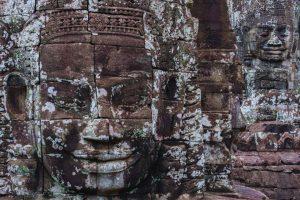
If you’re joining the Angkor Sunrise Tour, your day starts at 4:20 am and includes Angkor Wat, Bayon, and Ta Prohm, so I’d wear a light sleeved top, breathable long pants, and walking shoes from the start. The Explore Angkor tour also includes Bayon, Ta Prohm, Angkor Wat, and sunset at Phnom Bakheng, where the peak has a 300-person limit, so you don’t want clothing issues slowing you down.
These are classic temple days. You’ll want comfort, yes, but not at the expense of entry. I’d also keep colors simple and fabric light. It looks better in photos, and it feels less sticky by midday.
Backcountry temple days
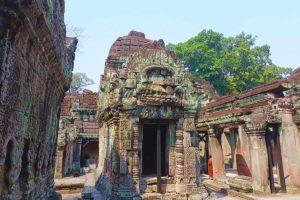
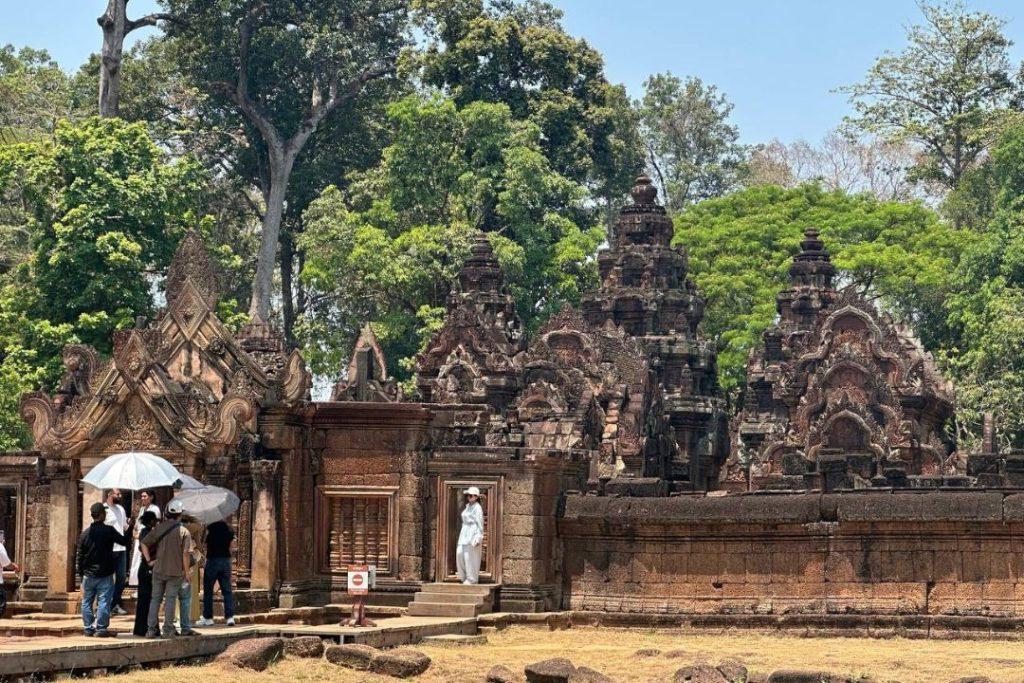
For the Banteay Srei Backcountry Tour, the route includes Pre Rup, Banteay Srei, East Mebon, Ta Som, and Preah Khan, with the return around 4 pm, so it makes sense to dress for a full day rather than a quick stop. The tour page also repeats the temple rule clearly: shoulders covered, and trousers or knee-length pants or skirts permitted.
I like this kind of day in lightweight trousers more than skirts, especially if you’ll be climbing, sitting, or stepping across uneven ground. It’s just easier. And if you love details and photography, Banteay Srei rewards slow looking.
Longer drives and quieter ruins
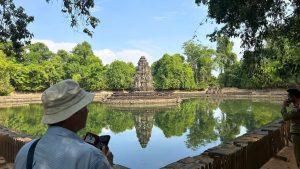
The Koh Ker and Beng Mealea Tour goes farther out, with Koh Ker about 120 kilometers northeast of Siem Reap and the drive taking around two hours, while Beng Mealea is about 66 kilometers from town and known for feeling much less crowded than Angkor Wat. That’s a strong case for breathable clothes, supportive shoes, and a shirt that still looks respectable when you arrive after time on the road.
And again, the tour page keeps the dress code simple: cover shoulders and wear trousers or knee-length bottoms. No need to overcomplicate it. Modest, breathable, walkable — that trio wins.
Nature plus sacred stops
If your plan mixes temples with a more active outing, the Kulen Waterfall Tour is the one I’d pair with quick-dry layers and a spare change of clothes. I’d still begin the day in temple-appropriate clothing, then adjust only when the itinerary clearly allows it.
And for a broader trip setup, I’d start on the Siem Reap Shuttle Tours homepage so you can match the right outfit to the right day. That one small planning step saves a surprising amount of hassle.
What to Wear in Cambodia Temples – Tour style and outfit planning
| Tour type | Best outfit | Why I recommend it |
|---|---|---|
| Angkor sunrise tour | Light sleeved shirt, loose pants, cushioned walking shoes | Early 4:20 am start, major temple access, and a full classic route through Angkor Wat, Bayon, and Ta Prohm |
| Explore Angkor day tour | Breathable modest outfit plus a light outer layer for sunrise-to-sunset comfort | Temple-heavy route and sunset finish at Phnom Bakheng, where timing matters because the peak has a 300-person limit |
| Koh Ker and Beng Mealea tour | Long breathable trousers, airy top with sleeves, solid shoes | Longer drives, quieter ruins, and clear on-page modest dress guidance |
What should go in your day bag with your temple outfit?
Keep it lean: one respectful outfit, one backup layer, and a few smart extras.
This is where What to Wear in Cambodia Temples becomes easier in real life. You do not need a huge wardrobe. You need one outfit that works, plus a few things that protect your comfort once the day gets hot, sweaty, or unexpectedly long.
Here’s the simple packing setup I usually recommend:
-
One sleeved top that fully covers the shoulders.
-
One pair of lightweight trousers or a skirt/dress below the knee.
-
Comfortable walking shoes with grip.
-
A spare pair of socks if you hate sweaty feet.
-
A compact rain layer in wet season.
-
Sunscreen and a hat for non-sacred outdoor sections.
-
Water and tissues.
-
A second top if you’re doing sunrise and expect to stay out all day.
Fabric matters more than most people think
Loose, breathable clothing is recommended again and again in Angkor dress guidance, especially cotton and linen, because those fabrics handle heat much better than heavy or restrictive clothes. That sounds obvious, but it’s the difference between “I’m warm” and “I want this day to end.”
I’d also avoid anything too tight, too sheer, or too fussy. Temple days are dusty, active, and longer than people expect. The best outfit is usually the one you stop noticing after 20 minutes.
What about men, women, and kids?
For men, the easiest answer is a proper T-shirt or polo with lightweight trousers. For women, a light blouse or tee with loose pants or a midi skirt usually works beautifully. For kids, I’d use the same rule as adults — shoulders and knees covered — but I’d make comfort the priority so nobody melts down before lunch.
And yes, modest can still look good. Clean lines, relaxed fabric, neutral colors — done. That’s enough.
What to Wear in Cambodia Temples – Pick the tour first, then build your outfit around it.
That’s honestly my favorite travel shortcut. Once you know whether you’re doing a sunrise temple circuit, a quieter backcountry route, or a mixed day with a pagoda stop, What to Wear in Cambodia Temples becomes much easier to get right.
If I’m being personal for a second, this is one of those topics that seems small until it affects your whole day. I’ve seen travelers stress over tickets, timing, and camera gear — then get tripped up by clothes. So my advice is simple: choose respectful clothing first, book the right itinerary second, and keep your day bag light. Start with the Siem Reap Shuttle Tours homepage, review the temple-friendly options, and then use the contact page to lock in the tour that fits your schedule. For current ticket details and pass planning, check the official Angkor Enterprise website.